Digital Marketing – Simple Explanation
Digital marketing means promoting your business or services using the internet.
Today, people search everything on Google, Instagram, and YouTube.
Digital marketing helps your business reach those people at the right time.
What You Do in Digital Marketing
In digital marketing, you learn how to:
- Show your website on Google
- Promote on social media
- Run online ads
- Create useful content
- Generate leads and sales

Main Types of Digital Marketing
1. SEO (Search Engine Optimization)
You improve your website so it appears on Google when people search.
2. Social Media Marketing
You promote your business on Instagram, Facebook, and YouTube.
3. Google Ads
You run paid ads to get instant traffic and leads.
4. Content Marketing
You create blogs, videos, and posts to attract users.
5. Email Marketing
You send emails for offers, updates, and communication.
Why Digital Marketing is Important
- Helps your business grow online
- Brings more customers
- Low cost compared to offline marketing
- You can track results easily
Who Should Learn Digital Marketing
- Students
- Business owners
- Job seekers
- Freelancers
Career Options
- SEO Executive
- Social Media Manager
- Ads Expert
- Freelancer
Digital Marketing + AI
Tools like ChatGPT and Google Gemini can help you create content and ideas.
But real success comes when you learn practical skills and apply them.
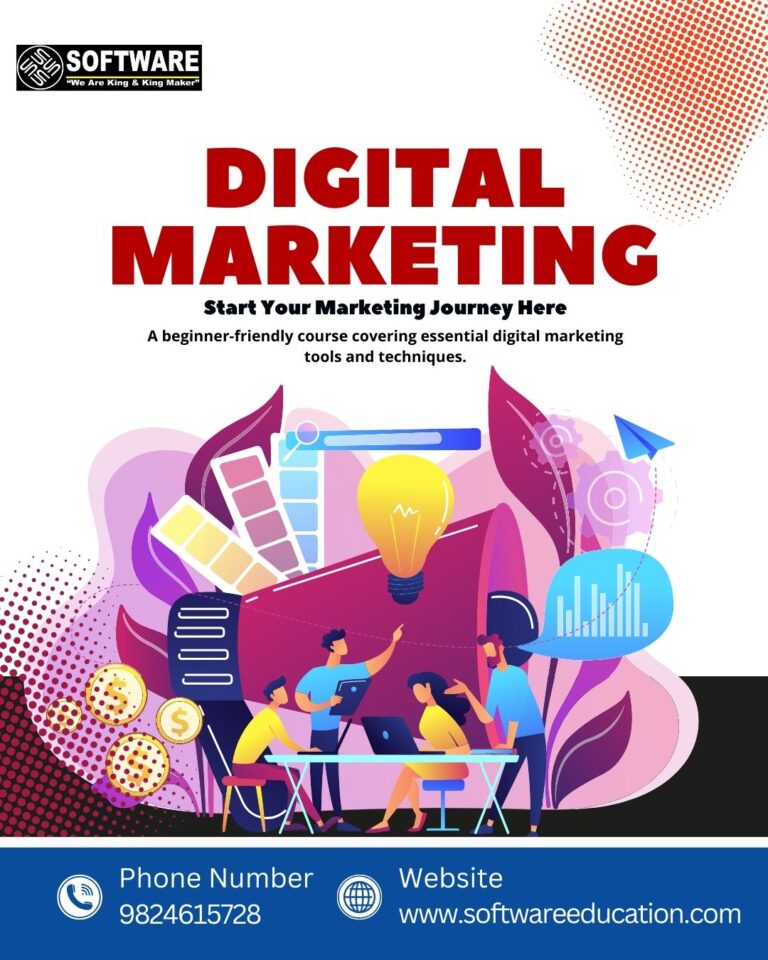
DIGITAL MARKETING (DURATION 60 HOURS)
Course Name: Digital Marketing Professional Course
🔹 Module 1: Foundations of Digital Marketing
Concepts: Definition, Importance, and Evolution of Marketing.
Comparison: Traditional Marketing vs. Digital Marketing.
Industry Insights: Benefits, Current Market Trends, and Future Scope.
Core Types: Overview of various Digital Marketing channels.
🔹 Module 2: Digital Marketing Strategy & Planning
Goal Setting: Creating SMART goals for business success.
Targeting: Defining Audience Demographics and Buyer Personas.
Marketing Funnel: Mastering Awareness, Consideration, Conversion, and Loyalty stages.
Financials: Budget Planning and ROI (Return on Investment) measurement.
🔹 Module 3: Digital Marketing Tools & Mastery
Analytics Tools: Google Analytics and Google Search Console.
SEO Tools: SEMrush, Ahrefs, and Moz for keyword and competitor research.
Management Tools: HubSpot (CRM), Mailchimp (Email), Canva (Design), and Buffer/Hootsuite (Social Media).
🔹 Module 4: Web Analytics & Data Insights
Traffic Analysis: Understanding where your visitors come from.
Key Metrics: Tracking Conversion Rates, Bounce Rates, and CTR (Click-Through Rate).
Engagement: Measuring user interaction and behavior on websites.
🔹 Module 5: Online Reputation Management (ORM)
Brand Monitoring: Tracking brand mentions across the web.
Feedback Management: Professionally handling reviews and customer feedback.
Crisis Management: Strategies to protect brand image during negative publicity.
🔹 Module 6: Legal, Ethical & Compliance
Data Privacy: Understanding GDPR and global data protection laws.
Compliance: Email marketing and digital advertising regulations.
Ethics: Ethical considerations in user tracking and ad targeting.
🔹 Module 7: Career Path & Industry Certifications
Job Roles: SEO Expert, PPC Specialist, Social Media Manager, and Digital Marketer.
Certification Guidance:
Google Ads & Analytics Certification
HubSpot Inbound Marketing
Meta Blueprint (Facebook/Instagram Ads)
SEMrush Academy
💼 Career Opportunities:
After completing this course, you can work as a Digital Marketing Manager, SEO Specialist, Content Strategist, or Social Media Consultant.